
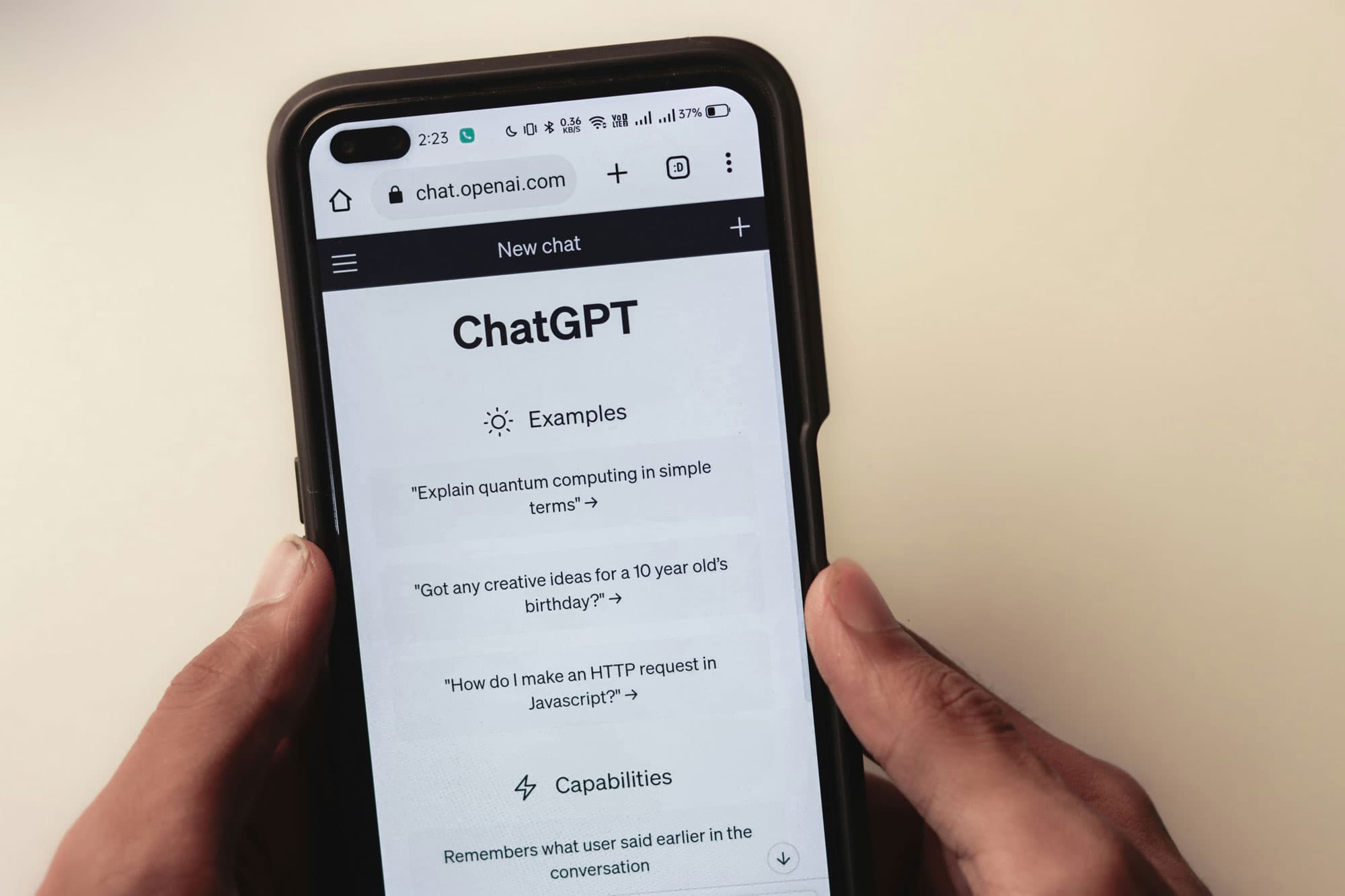
How Brands Become Visible in ChatGPT, Gemini & Co.
Data-driven insights from 10,541 real AI conversations – collected from 425 smartphone users across ChatGPT, Gemini, and Google AI Mode (February–March 2026).#
GenAI as a New Touchpoint for Brands#
"Can you recommend a good TV for me?" – a simple question that used to be asked in Google Search or at the electronics store. Today, more and more consumers type it into ChatGPT, Gemini, or Google AI Mode. And the AI doesn't just answer – it recommends specific brands and products.
What does this mean for brands? Our analysis of 10,541 real AI conversations shows: GenAI apps have long been a relevant brand touchpoint – and the AI itself is becoming an active recommender.
The Data Basis#
This analysis is based on 10,541 real conversations from 425 active GenAI users (ChatGPT, Gemini, Google AI Mode), collected between February and March 2026 via the Murmuras smartphone panel (1,500 participants, online-representative according to best4planning quotas). The conversations were captured and analyzed by screen recording with participants' consent.
1. Every Second AI Conversation Mentions Brands#
The key finding: in 50% of all analyzed GenAI conversations, at least one brand is mentioned. Every second conversation users have with AI assistants has a direct brand reference.
An average of 4.3 brands per conversation: When brands appear, they rarely appear alone. On average, 4.3 brands are mentioned per conversation (median: 3), and as many as 7.6 in conversations about product comparisons. AI dialogues are thus veritable brand arenas, where brands stand side by side and are compared.
| App | Conversations | With brands | Share |
|---|---|---|---|
| Google AI Mode | 1,760 | 1,191 | 67.7% |
| Gemini | 3,162 | 1,751 | 55.4% |
| ChatGPT | 5,619 | 2,325 | 41.4% |
Notably: Google AI Mode shows the highest brand presence at 67.7%, as the mode is integrated directly into Google Search and is frequently used for product-related queries. ChatGPT has the lowest rate at 41.4% – attributable to its stronger use for creative and non-consumption-related tasks.
Brand density varies considerably across topic areas. In categories such as "Finance & Insurance" or "Entertainment & Media," brand presence is very high, while areas such as "Family & Relationships" remain almost brand-free.
Top Brands: Platforms vs. Product Brands#
In total, 11,063 different brands were identified in the conversations. For a more differentiated view, we distinguish between platforms/retailers and product brands. At the conversation level, 68% of brand conversations contain exclusively product brands, 26% both platforms and product brands, and only 6% exclusively platforms.
Among platforms and retailers, MediaMarkt (362 mentions), Amazon (318), and Google (147) lead, followed by YouTube, Otto, and eBay.
| Retail category | Top product brands |
|---|---|
| Electronics & Entertainment | Samsung, Hisense, Sony |
| Automotive & Mobility | Volkswagen, Dacia, Bosch |
| Home, Garden & Kitchen | JYSK, Bosch, Philips |
| Food & Beverages | EDEKA, Skyr, McDonald's |
| Beauty & Personal Care | L'Oréal, Balea, NEONAIL |
| Health | Mivolis, Loperamid, Skinoren |
| Fashion | Pandora, Hunkemöller, Curvy Kate |
| Pet Supplies | Royal Canin, Hill's, Kattovit |
Samsung clearly dominates: with 148 mentions, Samsung is the most frequently mentioned product brand – almost three times as often as the runner-up, Hisense. The top product brands come predominantly from the electronics and automotive sectors.
2. The AI Actively Recommends Products#
In 19% of all conversations, the AI gives active product recommendations – including 1,121 specific, 690 general, and 176 comparative recommendations. GenAI apps are therefore not just passive sources of information – they actively steer which products and brands users get to see.
Who Brings Brands into the Conversation First?#
In conversations with a recommendation and a brand reference, a clear pattern emerges: in 96.8% of cases, the user already mentions at least one brand in their first message – the AI introduces brands on its own, without prior mention by the user, in only 3.2% of cases.
| Recommendation type | User-initiated | AI-initiated |
|---|---|---|
| Specific recommendation | 97.6% | 2.4% |
| General recommendation | 95.1% | 4.9% |
| Comparative recommendation | 96.0% | 4.0% |
The pattern is consistent across all recommendation types: in the vast majority of cases, users already enter the conversation with a concrete brand reference. The AI therefore gives product recommendations primarily in the context of questions in which the user already knows and actively raises brands.
But When Does the AI Recommend Products & Brands?#
An analysis of conversation flows shows: by far the most common context for product recommendations and corresponding brand mentions is the active research and evaluation phase.
| Conversation context | Share of AI recommendations | Description |
|---|---|---|
| Research & Evaluation | 39.8% | User compares options, researches products or providers |
| General Information | 26.6% | User asks an open question, AI introduces products/brands |
| Active Purchase Intent | 21.1% | User asks about prices, shops, or availability |
| Problem-solving | 7.9% | User describes a problem, AI suggests solutions or alternatives |
| Inspiration | 4.4% | User looks for ideas, AI delivers concrete product suggestions |
| Unclassified | 0.2% | – |
The recommendations are also distributed across three types: 56.4% are specific recommendations (a concrete product/brand), 34.8% general recommendations, and 8.9% comparative recommendations.
Only 21.1% of recommendations arise in the context of explicit purchase intent. In 78.9% of cases, the AI gives product recommendations in other conversation contexts – most often during general research or information seeking. This means: product recommendations are not a pure purchase-advisory tool, but accompany the user throughout the entire decision-making process – from the first piece of information to concrete purchase intent.
Google AI Mode Knows Brands#
Google AI Mode, Gemini, and ChatGPT differ markedly in how brands and product recommendations appear in conversations. Most strikingly: in 67.6% of conversations with Google AI Mode, brands are mentioned – almost twice as often as with ChatGPT (40.7%). Users thus come to Google AI Mode specifically with brand knowledge – but apparently expect information rather than a recommendation: at 16.8%, its recommendation rate is the lowest of the three platforms. Gemini, on the other hand, is the most active recommendation AI: every fifth conversation (21.1%) contains a product recommendation. The picture shows: the same question leads to different recommendation strategies depending on the AI platform.
3. Conclusion & Outlook#
Key Insights#
• Every second AI conversation mentions brands (50%). GenAI apps are thus a relevant touchpoint for brands.
• Over 11,000 different brands were identified. Samsung is the most frequently mentioned product brand; MediaMarkt and Amazon lead among platforms.
• The AI actively recommends products in 19% of cases, acting as an active brand touchpoint.
• Around 40% of the AI's product recommendations arise in the context of research & evaluation – users actively ask the AI for suggestions.
• Google AI Mode has the highest brand presence (68%); Gemini gives the most product recommendations.
Outlook: What the Data Can Still Reveal#
The results shown here are only a first glimpse. New possibilities arise in particular from combining the GenAI data with further digital data such as website visits or social media consumption – which Murmuras also collects from its users:
From AI recommendation to website visit: Does a brand mention by the AI actually lead users to subsequently visit the brand's website or an online shop?
Brand funnel in GenAI chats: How can the classic marketing funnel (awareness → consideration → purchase intent) be mapped onto AI conversations? Which brands dominate in which phase – and how does this differ from brand perception on classic digital channels?
Competitive positioning: Which brands are mentioned as alternatives when a user asks about a particular brand? Does this match what users see on comparison portals and on social media?
Long-term development: How do brand presence and AI recommendations change over time – and do shifts correlate with campaigns, product launches, or media buzz?
This analysis is based on data from the Murmuras Consumer Panel (February–March 2026). Murmuras operates a privacy-compliant smartphone panel and, with participants' consent, captures real digital usage behavior, including AI interactions. For further analyses and individual brand insights, contact us at info@murmuras.com.
Ready to unlock consumer insights?
See what real-world mobile behavior data can reveal for your business questions.
About the author
Isabelle Halscheid
Related Posts
Murmuras launches new measurement for GenAI usage behavior
AI assistants like ChatGPT and Google Gemini are becoming the first port of call for consumer questions. Murmuras has expanded its on-screen measurement technology to capture real GenAI usage—tracking questions, AI responses, and user interactions across 3,000 German users. This new measurement enables companies to understand how AI applications impact brand visibility, SEO, and content strategy.
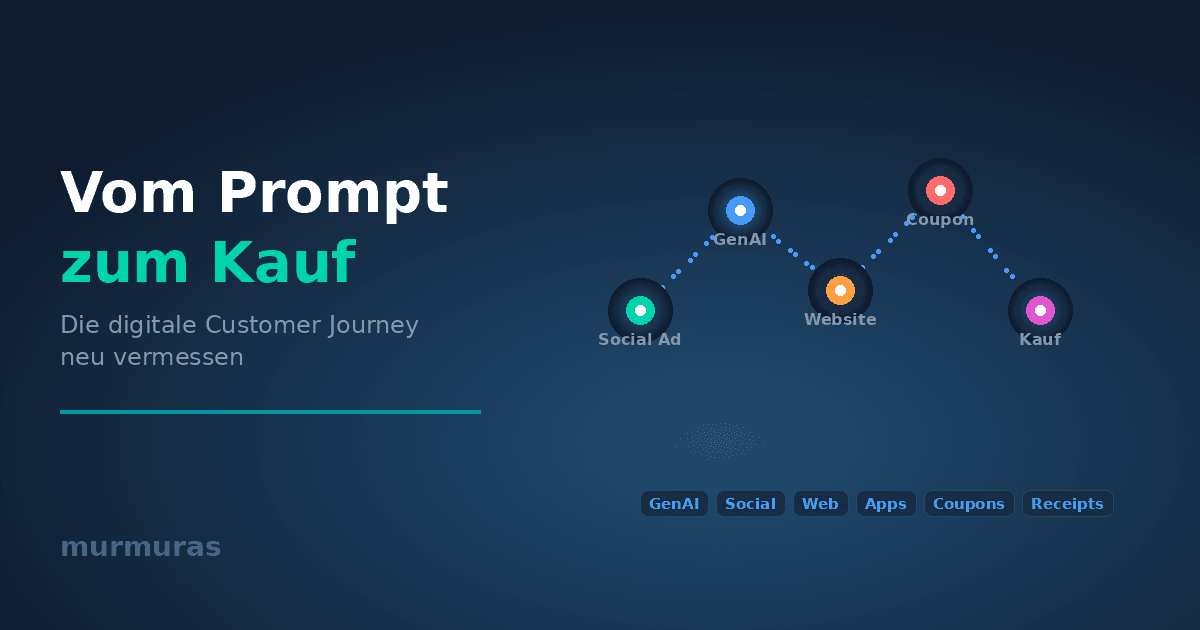
From Prompt to Purchase: The Digital Customer Journey Is Going Invisible – Here's How We Make It Measurable
How Murmuras uses app data from 3,000 smartphone users to map the entire customer journey – from social media ads through AI chats to the receipt. A privacy-compliant smartphone panel makes visible what traditional tracking misses, and answers business questions along the entire journey.
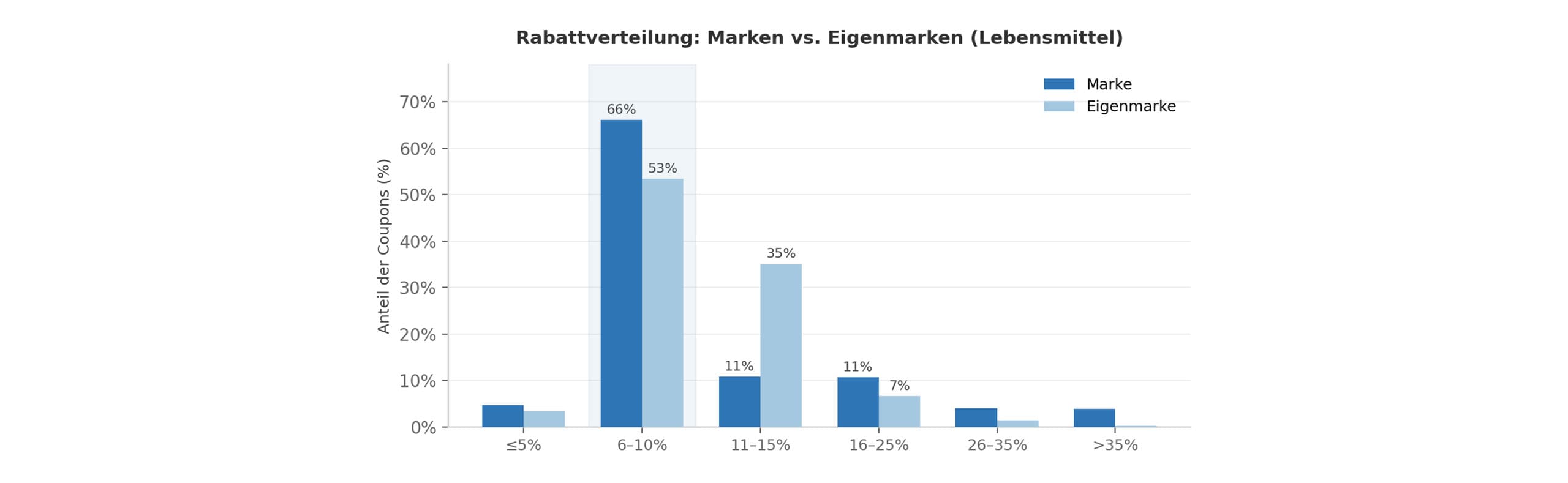
Couponing in Retail Apps: Where FMCG Brands Give Away Visibility
Every second coupon in German retail apps promotes a branded product – yet private labels and generic offers dominate the picture. A Murmuras analysis of over 27,000 coupons across eight retail and drugstore apps reveals where FMCG brands give away visibility and the three levers they can pull to win it back.