
Murmuras receives support from BMVI to optimize public transport planning using smartphone data
Press release: The project "Smartphone sensing in public transport" is funded with a total of 50,000 euros by the Federal Ministry of Transport and Digital Infrastructure as part of the mFUND innovation initiative.
Public transport is of great importance to society, both in cities and in rural areas. In addition to punctuality and reliability, frequency, travel time and network coverage are key factors that must be aligned with the needs of passengers in the best possible way.
To optimize public transport planning, cities, municipalities and transport operators must analyze the current behavior of passengers and find out in which specific situations people use public transport services or use alternatives. The internal monitoring of transport associations only records existing public transport users, is time-consuming and labor-intensive, and the resulting subjective data contain a considerable bias.
"Smartphone data offers excellent opportunities to analyze people's behavior objectively and in the background" says Professor Alexander Markowetz, co-founder of Murmuras. Since both digital activities (e.g. app usage) and behavior in the physical world (GPS/mobility) can be captured via cell phone, this multi-channel technology is especially suitable for optimizing public transport planning."
Murmuras is a leading startup in the field of smartphone sensing and aims to develop a model for optimizing public transport planning based on real, dynamic smartphone usage data and stationary basic data from the MDM portal (e.g.: stop information). The data was voluntarily provided to Murmuras by hundreds of participants for study purposes. The data processing is secure and DSGVO-compliant on Murmuras servers located in Germany.
The model is intended to form the basis for novel analyses in connection with public transport planning (e.g., by municipalities, transport operators, scientific institutions). It expands the existing research portfolio in the field of smartphone sensor technology. Murmuras founders are building on experience with predecessor app Menthal, which has the world's largest scientifically usable smartphone data set with more than 700,000 subjects.
Another goal of the project is to publish a study that will answer the following research questions:
-
Which apps do people use for transportation, especially public transportation, depending on the place and time?
-
What other transportation options do they consider?
-
Which mobility apps do subjects use depending on location and time and in which cases do they decide for or against public transport?
About the BMVI's mFUND: As part of the mFUND research initiative, BMVI has been funding research and development projects related to data-based digital applications for Mobility 4.0 since 2016. In addition to financial funding, mFUND supports networking between stakeholders from politics, industry and research with various event formats and access to the mCLOUD data portal. For more information, visit www.mfund.de.
Ready to unlock consumer insights?
See what real-world mobile behavior data can reveal for your business questions.
About the author
Murmuras
Related Posts
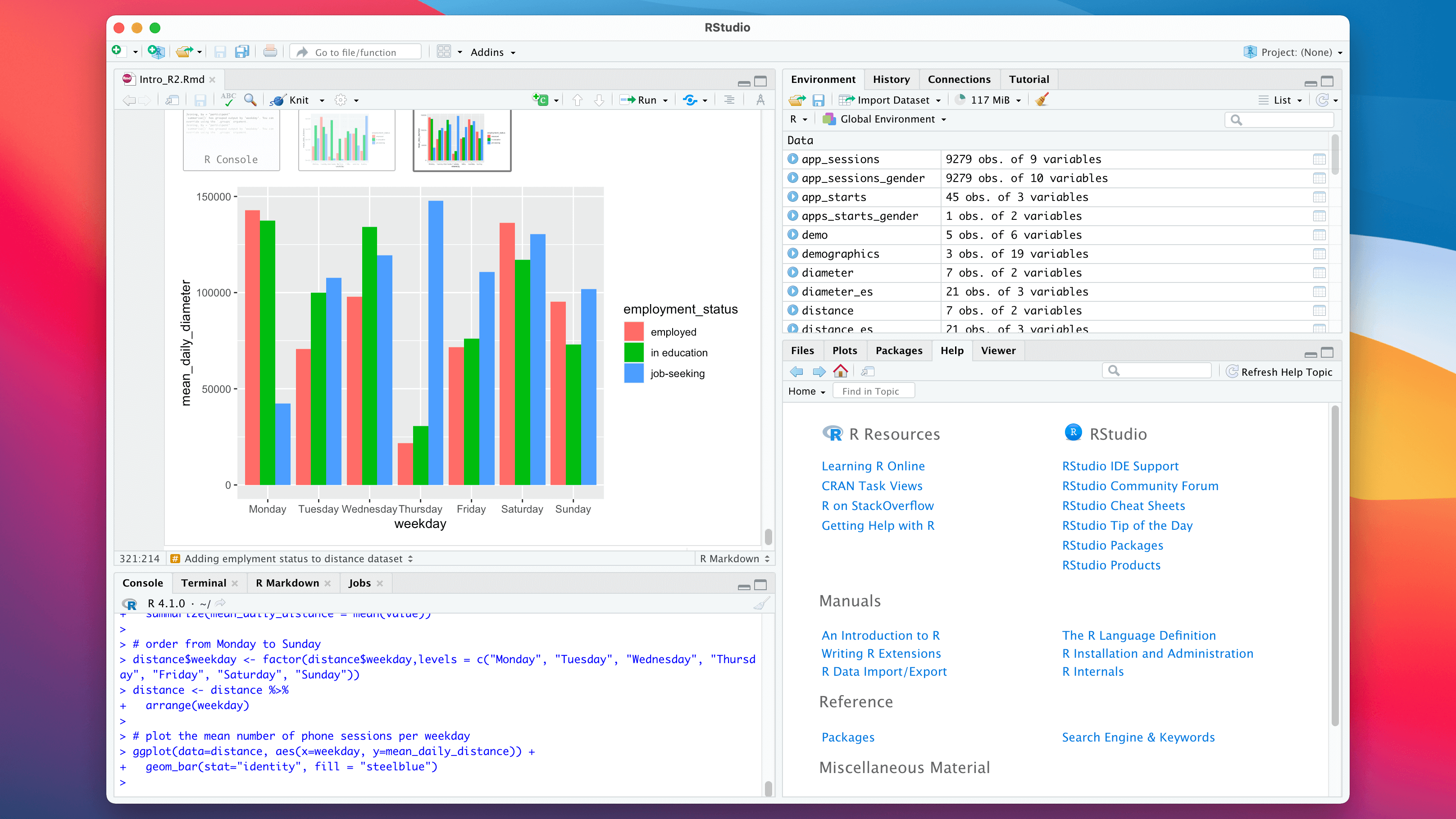
Analyzing smartphone usage data with R - Part 2: Long Format
In part 2 of our tutorial series, we show you how to analyze long format smartphone usage data from the Murmuras Platform in R. You will learn to compute mean phone usage, average phone sessions per day, mean app usage durations, and more. You will also gain insight in basic processing of location data, and comparing mobility behavior of students and employed people.
Analyzing smartphone usage data with R - Part 1: App sessions
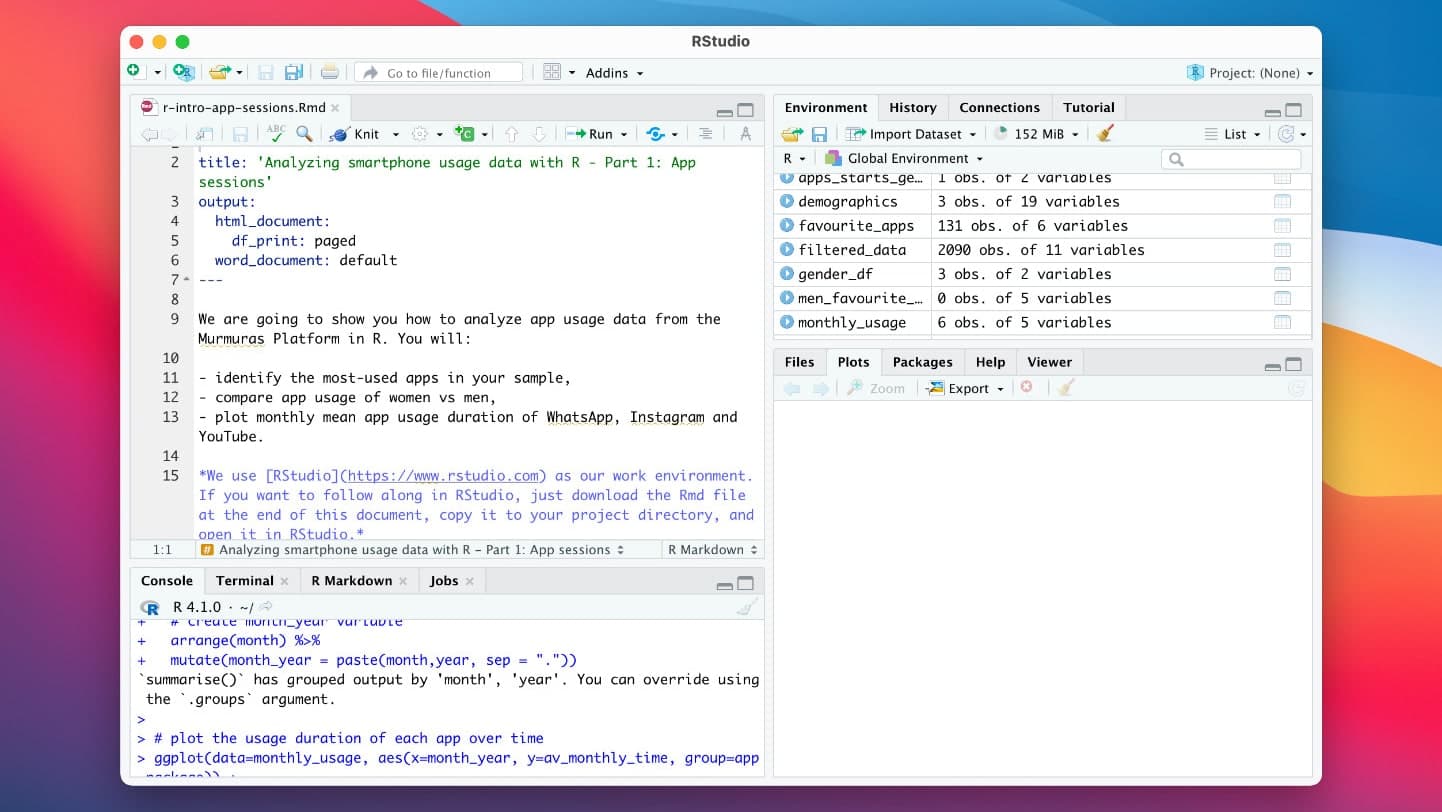
This tutorial shows you how to analyze smartphone usage data from the Murmuras Platform in R. In Part 1, you will learn to identify most-used apps in your sample, compare app usage of women vs men, and plot monthly mean app usage duration of WhatsApp, Instagram and Youtube.
Black Week 2021 - Advertising and Shopping in Smartphone Apps
The Corona pandemic continues to shape people's everyday lives in 2021. We are continuing our article series on Christmas shopping behavior. Our analysis focuses on Black Week with Black Friday, in comparison to the previous weeks of November. The analysis is based on real in-app smartphone usage data from everyday life - not on questionnaires.