
Good Morning Smartphone! How Germany sleeps in 2020
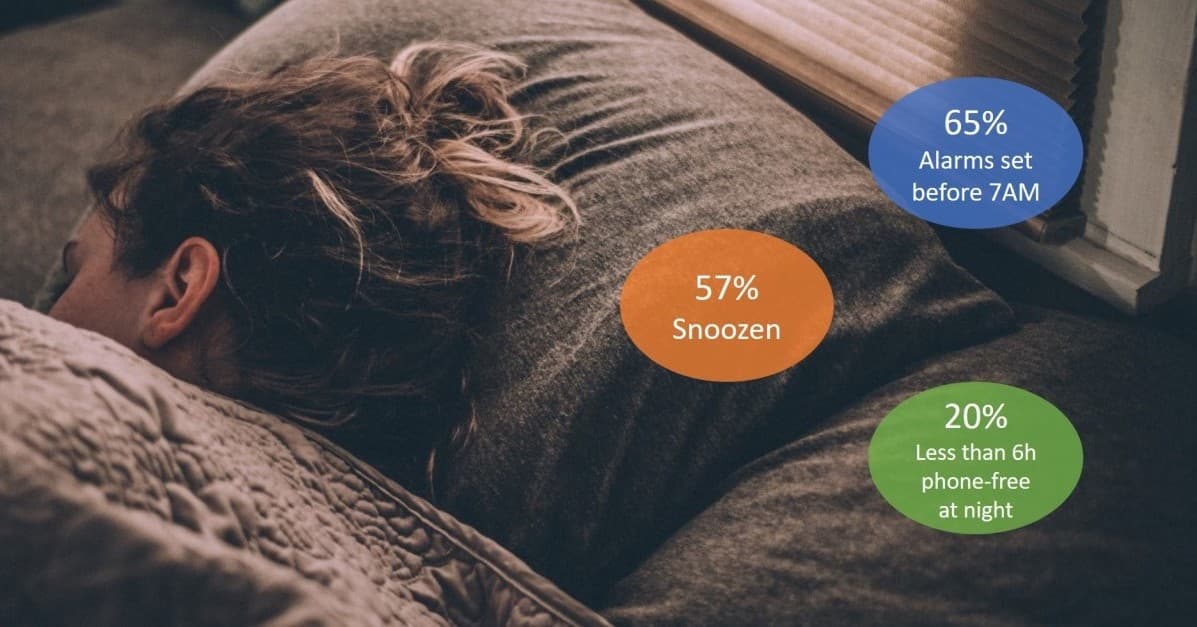
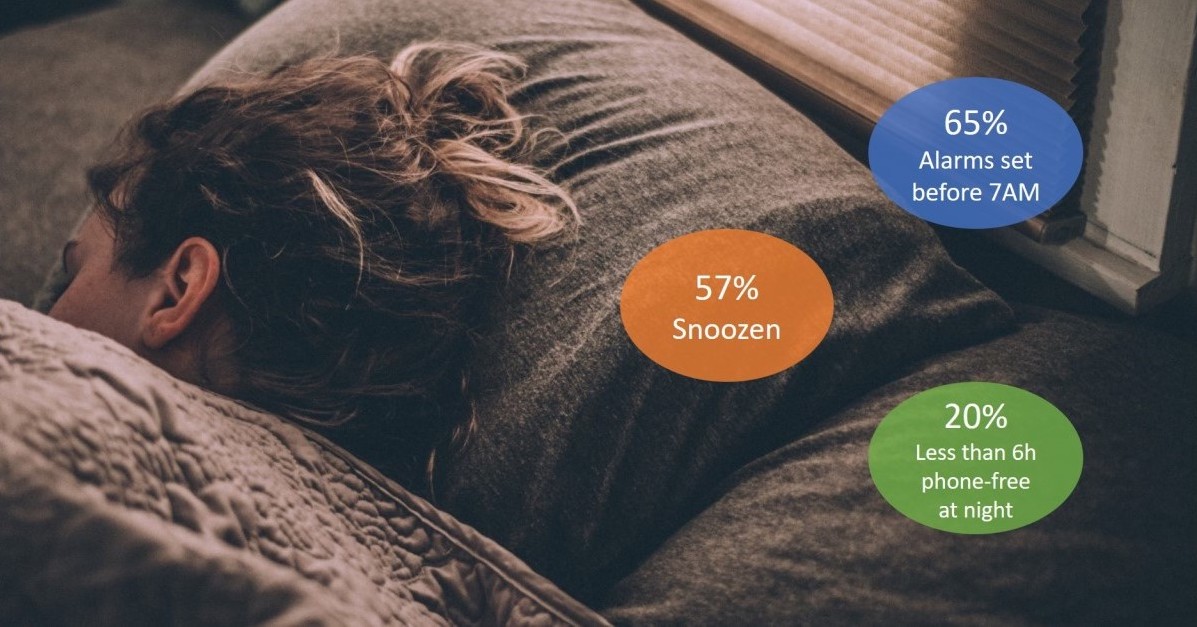
A large proportion of the working population still uses their smartphone after 11 pm. At the same time, 65% of phone alarm clocks ring before 7 am. In every fifth night, smartphone free time is less than 6 hours at a stretch. These are results from a Murmuras study with 860 participants from Germany, where real smartphone data was analyzed. The sleep study ran, with the consent of the test persons, from July until October 2020.
The collected data allows objective insights into German sleeping habits: When does the alarm clock ring in the morning? How often do people snooze it? What are the last used apps in the evening? From when to when is the longest smartphone free time (= max. sleeping time in a row)?
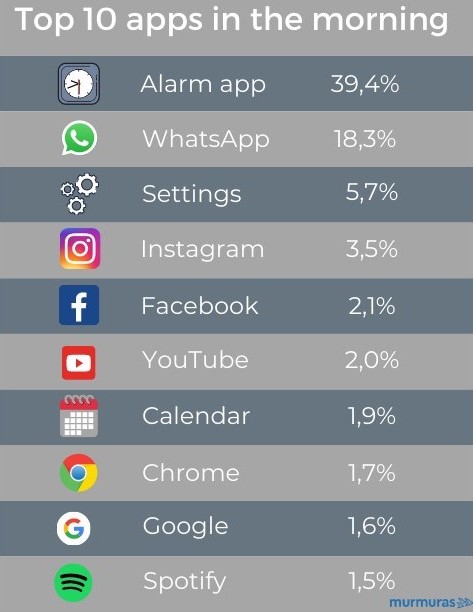
40% of mornings a phone alarm is set
"Buy an alarm clock, banish the smartphone from the bedroom," says Prof. Alexander Markowetz, co-founder of Murmuras and author of the book "Digital Burnout”. Quickly turning off the smartphone alarm, reading WhatsApp messages, YouTube or Instagram – this is how many young smartphone users are spending their mornings in bed. Even though philosopher Henry David Thoreau already noted in the 19th century that the awakening hour is the most memorable season of the day. Despite this century-old insight, the smartphone is often an essential component of the morning routine. Data from the Murmuras sleep study shows, that in 39% of mornings Germans use an alarm clock, on weekdays the value is even higher at 45%. After alarm clock app, WhatsApp is the most popular first application in the morning (18%).
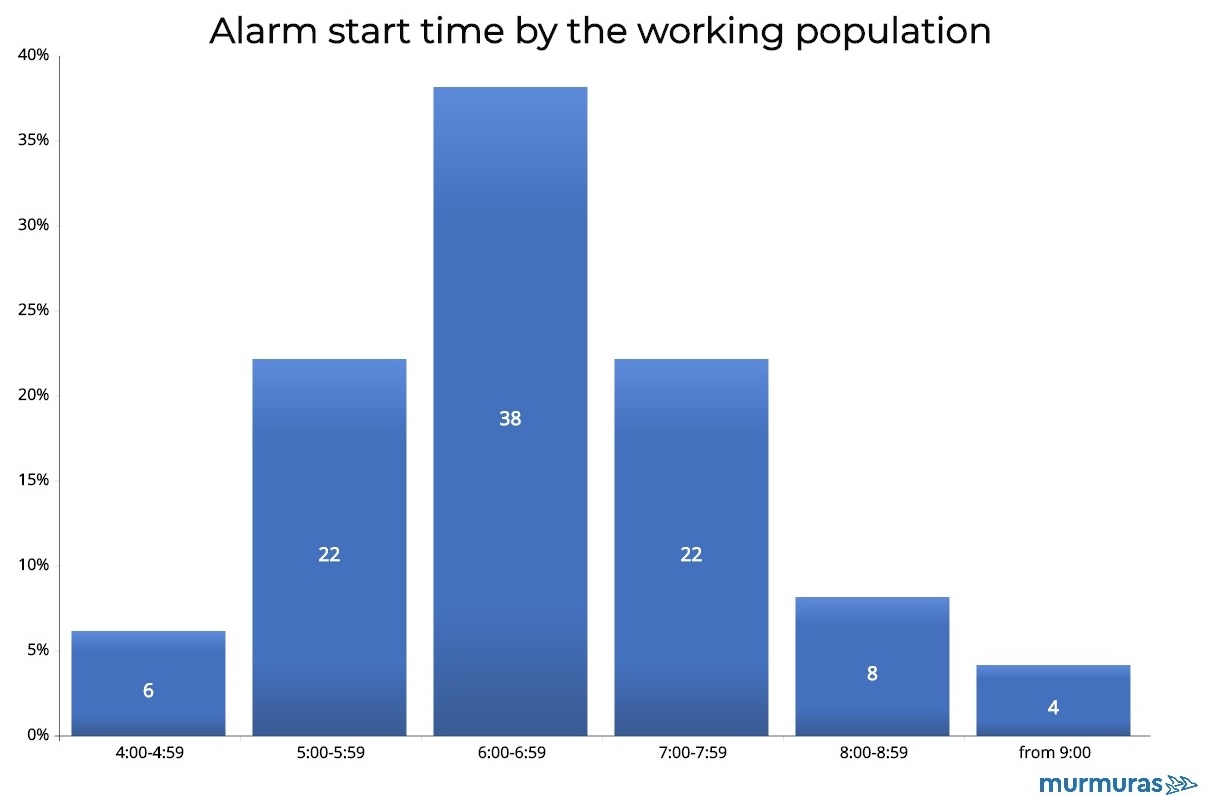
65% of mornings, working people set the alarm earlier than 7 am
In two thirds of mornings, working Germans set their phone alarm clock between 4:00 - 6:59 am. 90% of phone alarms are set before 8 am. Students set their alarm clock about one hour later on average: 68% of students set it before 7:59 am and 91% before 9 am.
57% snooze in the morning
How often was the phone alarm snoozed in the morning? According to our data analysis in 57% of cases. Also interesting: There was no significant difference between men and women.
Younger people are using smartphones later at night
60% of nights, working people still use their smartphone after 11 pm. For all phone users between 18-25 years, that figure is over 70%. In the age group over 40, only 41% use their smartphone late at night.
The most used app before sleeping time is the alarm clock with 22%, followed by WhatsApp (16%) and social media apps Instagram (7%) and Facebook (5%).
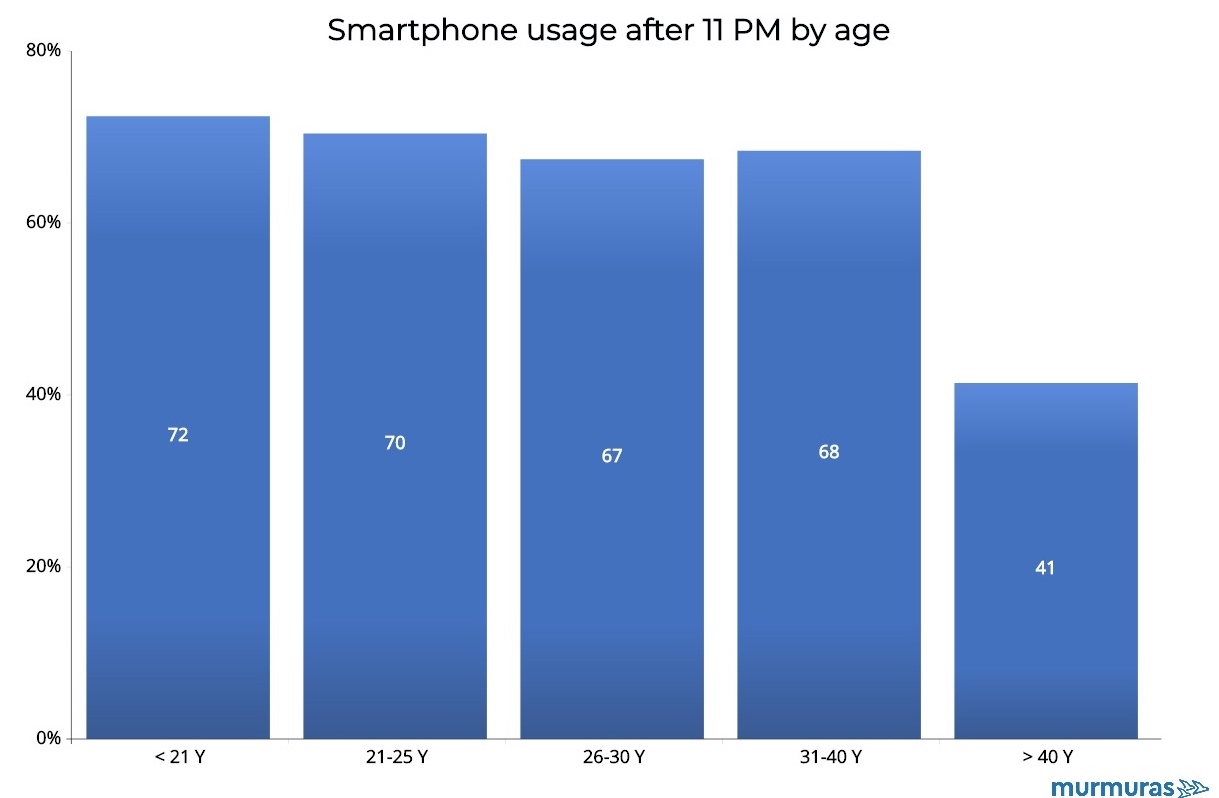
20% of nights, employed persons have less than 6 hours of smartphone-free time
Employed people had less than 6 hours of continuous smartphone-free time every fifth night. According to our measurements, these nights were either interrupted or ended with active app usage. Sessions where only the cell phone start screen was opened are not considered here. Thus, in at least 20% of nights, participants slept less than 6 hours in a row.
How smartphone data can help sleep research
For the Murmuras study, 860 test persons agreed to have their smartphone behavior recorded from July until October 2020, accurate to the second. The data was processed in compliance with GDPR and exclusively for scientific purposes. Participants answered socio-demographic questions to be differentiated by age, gender and other markers. This method has various advantages over traditional approaches, which investigate sleep behavior through surveys or laboratory experiments. Test persons can participate in scientific studies in large numbers and without great effort. At the same time, thousands of objective data points on the real behavior of test persons are collected. Highly individualized analyses can be carried out over a longer period of time and risk profiles can be identified more easily, including for example behavioral changes due to corona. By adding context-triggered questionnaires ("You have just switched off your smartphone alarm. Are you still tired?") and wearables (e.g. recording pulse during the night), Murmuras is also working on additional methods to improve sleep research on a broad scale.
Ready to unlock consumer insights?
See what real-world mobile behavior data can reveal for your business questions.
About the author
Murmuras
Related Posts
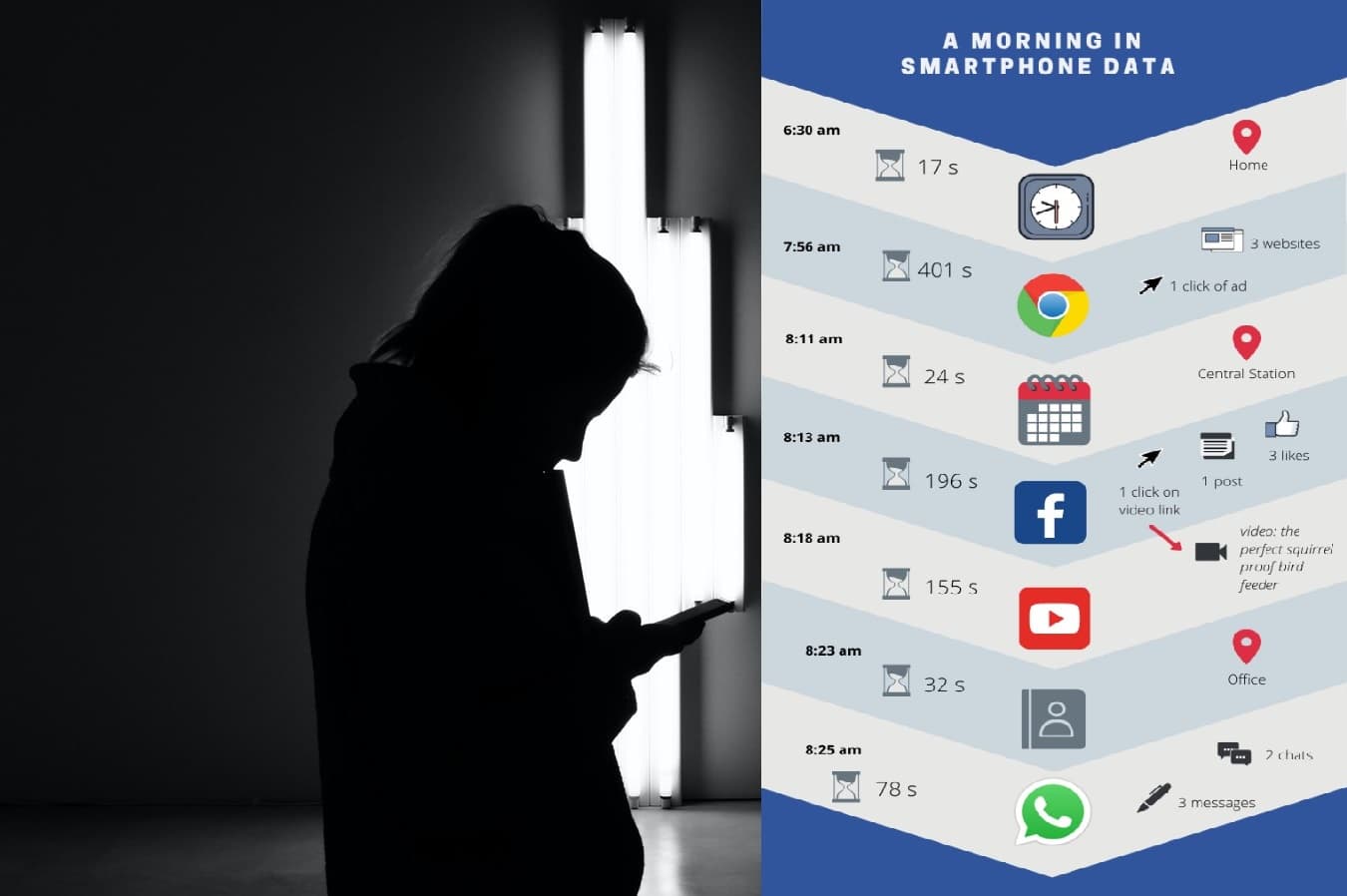
What smartphone data reveals about human behavior - Opportunities for academic researchers
As constant companions, smartphones provide unique insights into people's daily lives and behaviors. While big tech companies have been using these insights for over 10 years, the method is only now emerging in the academic world. But what exactly can be measured with smartphone data? Which academic researcher can actually benefit from using this method? And what about data privacy?
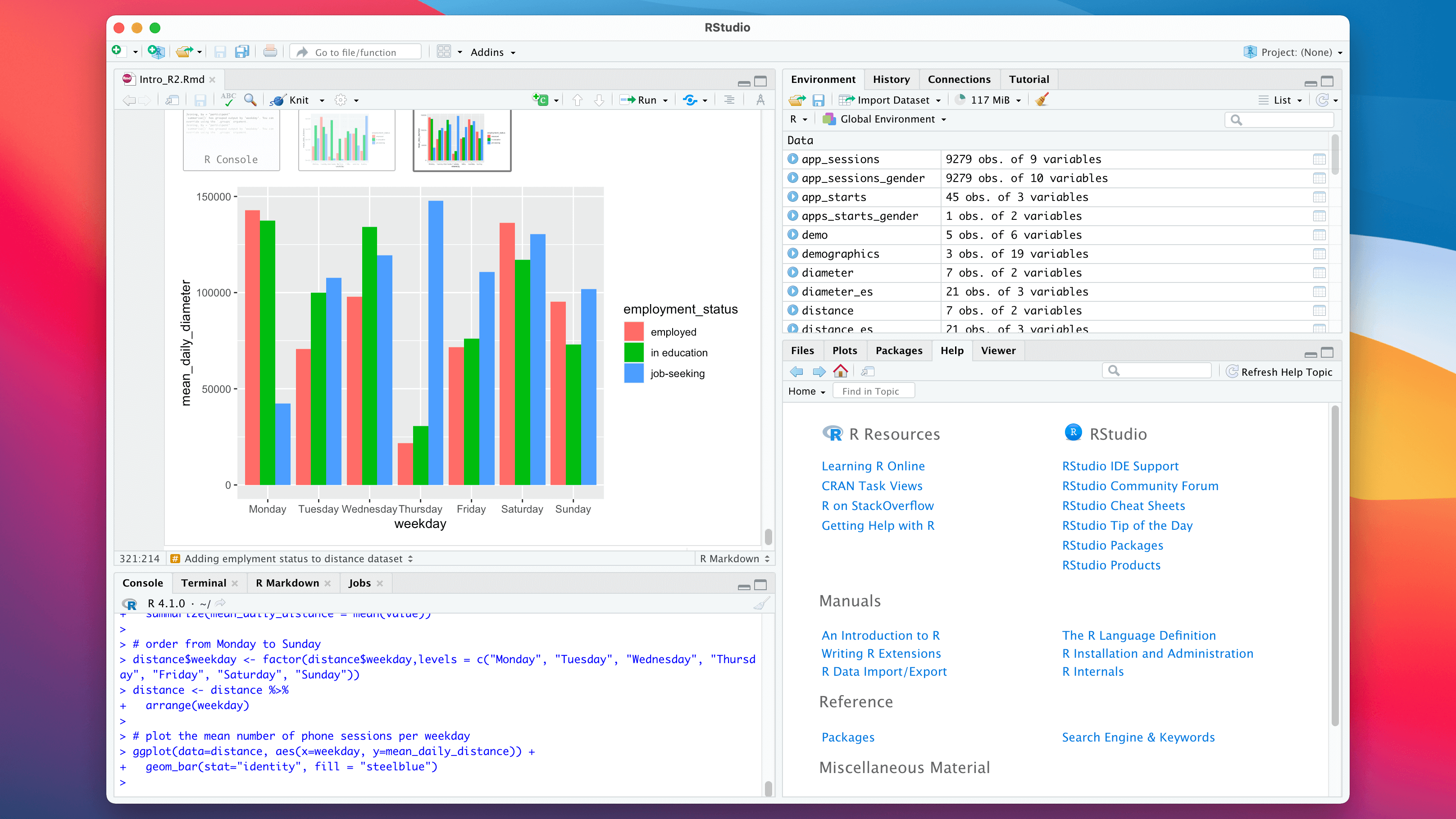
Analyzing smartphone usage data with R - Part 2: Long Format
In part 2 of our tutorial series, we show you how to analyze long format smartphone usage data from the Murmuras Platform in R. You will learn to compute mean phone usage, average phone sessions per day, mean app usage durations, and more. You will also gain insight in basic processing of location data, and comparing mobility behavior of students and employed people.
Black Week 2021 - Advertising and Shopping in Smartphone Apps
The Corona pandemic continues to shape people's everyday lives in 2021. We are continuing our article series on Christmas shopping behavior. Our analysis focuses on Black Week with Black Friday, in comparison to the previous weeks of November. The analysis is based on real in-app smartphone usage data from everyday life - not on questionnaires.